Showing posts with label English Language. Show all posts

Thursday, July 17, 2025

Reading Strategies and Book Suggestions for English Learners

 Reading is a powerful tool for English learners. While there are different types of materials learners can use, reading books are one of the best types of materials. This article gives some advice on how to improve your English by reading books, and also gives a list of some good books for learners of different levels.

  • Read what you love: Motivation is essential for learning. Choose books with topics and stories that are interesting to you.
  • Get the book in your native language: If possible, get the book in your native language as well. This allows you to more easily check words and parts, which you don’t understand.
  • Listen and read: Many books have audio versions. Reading the text while listening to the audiobook is an excellent way to get reading and listening practice together. Listening as you read also helps with pronunciation, rhythm, and intonation.
  • Shadowing: You can also get some speaking practice though reading. Practice "shadowing" – repeating what you hear immediately after the speaker. This builds fluency and natural speech patterns.
  • Discuss what you read: Talk about the book with a teacher or language partner. This helps your understanding and provides valuable speaking practice.
  • Something is better than nothing: Don't feel the need to read large amounts at one time. On days with more time, read more. On busy days, even just a page or a paragraph is better than nothing. The main goal is consistency.
  • Free online resources: Remember, many classic books are available for free online. Most classic books are in the public domain (anyone has the right to copy and read them), and there are some good online libraries for works in the public domain. Three of the best are Wikisource, Project Gutenberg and Open Library.
  • Prepare before reading the book: For some more challenging books, it can be helpful to prepare before reading the book. You can do this by reading a summary of the story and the main characters.
  • Watch the movie: After you read the book, you can watch the movie adaption of the book. This can be good listening practice and can provide a topic for speaking practice.  For example, what are the differences between the movie and the book? If the book is more challenging, it might be useful to watch the movie even before you read the book, to help you get a better idea of the story and characters.

Book Recommendations

To help you get started, here's a list of suitable books for English learners at different levels, from the easiest levels (A0-A1) to more difficult and challenging levels (B2 to C2).

This list also highlights excellent graded reader series specifically designed for English language learners, which are highly recommended for structured progress.

I. Beginner (A0 - A1):

Dedicated Graded Reader Series: These are excellent resources for beginners. They are specifically written with vocabulary and grammar for each level.

Penguin Readers: Easystarts (A0) & Level 1 (A1)

Oxford Bookworms Library: Starter (A1) & Stage 1 (A1)

Cambridge English Readers: Starter (A1) & Level 1 (A1)

Macmillan Readers: Starter (A1) & Beginner (A1)

Very Simple Children's Books/Picture Books:

The Cat in the Hat (Dr. Seuss) - Simple, repetitive language, rhyming.

The Very Hungry Caterpillar (Eric Carle)

Brown Bear, Brown Bear, What Do You See? (Bill Martin Jr.)

Aesop's Fables - Short, clear moral stories (often adapted for A1).

"I Can Read" Books (various authors/series) - Leveled readers for native-speaking children, perfect for ESL beginners.

Simple Non-Fiction Picture Books (focus on basic concepts).

Simple Fables from Around the World.

Others:

The Happy Prince and other stories (Oscar Wilde - often adapted for A2).

II. Elementary to Low Intermediate (A2 - B1):

Dedicated Graded Reader Series:

Penguin Readers: Level 2 (A2) & Level 3 (B1)

Oxford Bookworms Library: Stage 2 (A2) & Stage 3 (B1)

Cambridge English Readers: Level 2 (A2) & Level 3 (B1)

Macmillan Readers: Elementary (A2) & Pre-intermediate/Intermediate (B1)

Classic Children's Novels (often adapted for this level):

The Little Prince (Antoine de Saint-Exupéry)

Peter Pan (J.M. Barrie)

Charlotte's Web (E.B. White)

The Wizard of Oz (L. Frank Baum)

Just So Stories (Rudyard Kipling)

The Jungle Book (Rudyard Kipling)

The Adventures of Pinocchio (Carlo Collodi)

Winnie the Pooh (A.A. Milne)

The Secret Garden (Frances Hodgson Burnett)

James and the Giant Peach (Roald Dahl)

Young Adult Series (generally lighter language):

Goosebumps (R.L. Stine)

The Giver (Lois Lowry)

The Outsiders (S.E. Hinton)

My Side of the Mountain (Jean Craighead George)

A Wrinkle in Time (Madeleine L'Engle)

Others:

Adapted short story collections for Learners (Hans Christian Anderson, Anton Chekhov, Leo Tolstoy, O Henry, Jack London)

Simple Biographies of Famous People

The Arrival (Shaun Tan)

III. Intermediate to Upper Intermediate (B1 - B2):

Dedicated Graded Reader Series: Move up to the more advanced levels of these series, tackling more complex vocabulary and longer sentences:

Penguin Readers: Level 4 (B2)

Oxford Bookworms Library: Stage 4 (B2) & Stage 5 (B2+)

Cambridge English Readers: Level 4 (B2)

Macmillan Readers: Upper Intermediate (B2)

Popular Novels with Accessible Language (original versions):

The Old Man and the Sea (Ernest Hemingway)

Animal Farm (George Orwell)

The Pearl (John Steinbeck)

Of Mice and Men (John Steinbeck)

Jonathan Livingston Seagull (Richard Bach)

Selected stories by Anton Chekhov (Joy, The Lottery Ticket, The Boys, Fat and Thin, The Doctor’s Visit, The Bet)

Selected stories by Leo Tolstoy (21 Tales, God Sees the Truth but Waits, What Men Live By, How Much Land does a Man Need?)

Selected stories of O Henry (often adapted)

White Fang (Jack London)

 The Call of the Wild (Jack London)

The Hobbit (J.R.R. Tolkien)

The Witches, BFG, and other Roald Dahl books (original versions) B1 to B2

The Alchemist (Paulo Coelho)

Graphic Novels (e.g., Persepolis, Maus).

IV. Upper Intermediate (B2 - C1):

              Dedicated Graded Reader Series: For those pushing towards advanced fluency:

Penguin Readers: Level 5 (B2+) & Level 6 (C1)

Oxford Bookworms Library: Stage 6 (C1)

Cambridge English Readers: Level 5 (B2+) & Level 6 (C1)

Macmillan Readers: Advanced (C1)

       Classic Novels with more complex language/themes:

Pride and Prejudice (Jane Austen)

1984 (George Orwell)

Fahrenheit 451 (Ray Bradbury)

The Lord of the Rings (JRR Tolkien)

Works of Ernest Hemingway (In Our Time, The Sun also Rises, For Whom the Bell Tolls, A Farewell to Arms, Men Without Women, The Snows of the Kilimanjaro and Other Stories)

Siddhartha (Hermann Hesse)

Candide (Voltaire)

The Prophet (Kahlil Gibran)

The Great Gatsby (F. Scott Fitzgerald)

The Hunger Games (Suzanne Collins)

Lord of the Flies (William Golding)

The Catcher in the Rye (J.D. Salinger)

Black Boy (Richard Wright)

Narrative of the Life of Fredrick Douglass (Fredrick Douglass)

Little Women (Louisa May Alcott)

The Color Purple (Alice Walker)

The Joy Luck Club (Amy Tan)

American Born Chinese (Gene Luen Yang)

House on Mango Street (Sandra Cisneros)

Short Stories of Jack London (To Build a Fire, Love of Life)

To Kill a Mockingbird (Harper Lee)

Life of Pi (Yann Martel)

The Bible (New International Version)

Tuesdays with Morrie (Mitch Albom)

A Tree Grows in Brooklyn (Betty Smith)

Harry Potter series (J.K. Rowling)

The Lion, the Witch and the Wardrobe (C.S. Lewis)

Anne of Green Gables (L.M. Montgomery)

A Christmas Carol (Charles Dickens - consider adapted version if original is too hard).

The Strange Case of Dr. Jekyll and Mr. Hyde (Robert Louis Stevenson)

The Meditations of Marcus Aurelius (Marcus Aurelius)

The Time Machine (H.G. Wells)

The War of the Worlds (H.G. Wells)

Dracula (Bram Stoker - often adapted).

Frankenstein (Mary Shelley - often adapted).

The Importance of Being Earnest by Oscar Wilde

Our Town (Thornton Wilder)

          Other Short stories

                         "The Story of an Hour" Kate Chopin

                         "The Lottery" Shirley Jackson

                         "The Umbrella Man" and "Lamb to the Slaughter" Roald Dahl

          More Challenging Short Stories:

Isaac Asimov (Science Fiction)

                        Going to Meet the Man (James Baldwin)

                        Dubliners (James Joyce)

                        Short stories of Leo Tolstoy

“The Sound of Thunder” (Ray Bradbury)

Works of H.P. Lovecraft "The Cats of Ulthar", "The Music of Erich Zann", "The Terrible Old Man", "From Beyond"

Works of Edgar Allan Poe "The Tell-Tale Heart", "The Cask of Amontillado, "The Black Cat"

Works of Philip K. Dick "Beyond Lies the Wub" "The Defenders" "Second Variety" “Adjustment Team”


Sunday, April 23, 2023

This Site Offers Free English Lessons For Ukrainians And Good Learning Resources For Any Students

 This organization matches volunteer English teachers and conversation partners with Ukrainians affected by the war:  https://www.teachersforukraine.org/

The site also has a good list of self-study materials for any students. Although it doesn't have computer assisted learning apps like Duolingo or Babbel, which can be very useful for beginners and pre-intermediate students. 

Saturday, April 10, 2021

Thursday, October 20, 2016

English for Russian Speakers: 10 More Common Mistake


This is the second article in a series of articles about common mistakes in English for Russian speakers (although English learners who speak other languages also make some of these mistakes too). You can see the first article here on this blog and here on Italki . Together, both articles include 25 of the most common mistakes made by Russian-speaking students learning English.


Dictionary and Vocabulary

Incorrect: In order to improve my English level, I need to increase my dictionary.

Correct: In order to improve my English level, I need to increase my vocabulary.

The confusion between these two words comes from the fact that in Russian they can both be translated as Словарь, but in English they are two different words. A dictionary is a book or an electronic resource that has a list of words and their definitions. Vocabulary refers to the words used in a particular language, or the words known by an individual.

Finding the definition of words in a dictionary can help you to increase your vocabulary.


Decide and Solve

In Russian, decide and solve are very similar and are both usually translated as решать, but they have different meanings in English. Decide means to make a choice, but solve means to make the best or correct choice to answer or fix a problem.

We decided to have Chinese food instead of Mexican food (we made a choice).

Solve this math problem: X+10=15

Tim and Tina decided that the best way to solve their relationship problems was to talk more with each other and improve their communication skills.


That and What

Incorrect: I think what you should study more.

Correct: I think (that) you should study more (‘that’ can be used or omitted).

In my opinion, this mistake is one of the most common and difficult to explain. Part of the problem is because that and what can both be translated as the Russian word что.

First let’s look at when to use what. The simple answer I sometimes give my lower level students is that you usually use that instead of what unless you are answering or asking a question with what. However, this is often not the case, and the actual answer is more complex.

The actual answer is that while the word what is often used as an interrogative pronoun (a pronoun used to ask questions), for example, “What is your name?”, it can also be used as a fused (joined) relative pronoun, for example, “I like what you wrote in the article’. This is a bit more difficult to understand, but basically, in this case what refers to the thing being liked (the article), and cannot be removed because it substitutes for the object in the first part of the sentence.

I like what you said at the meeting yesterday.

Therefore, when what is the object of a noun clause, like in the above examples, it is necessary and cannot be removed.

However, when that is used as a conjunction to introduce a noun clause, it’s not necessary, and in cases where the sentences is clear, we can omit that:

He told me (that) he had been there before.

She decided (that) it was a good idea to bring an umbrella.

I think (that) studying another language is a good use of time.


Fun and Funny

Incorrect: The joke was so fun (that) we laughed out loud (yes, we can omit ‘that’ here! See above).

Correct: The joke was so funny (that) we laughed out loud.

Incorrect: Learning new things can be funny.

Correct: Learning new things can be fun (yes, it can sometimes be funny too depending on what you learn!)

It’s fun to play in the sun.

Fun (весело) is something that is enjoyable and pleasurable.  Funny (смешной)  is something that is humorous and might cause us to laugh or something that might seem amusing (забавный).  It’s easy to confuse the meanings because they can be similar: something fun can be funny and something funny can be fun.

We had a fun time watching funny movies.


Learn and Study

Incorrect: Babies study how to make sentences after the age of two years old.

Correct: Babies learn how to make sentences after the age of two years old.

Like in Russian, learn and study are very close in meaning, and often we can substitute one for the other. For example:

We already learned/studied that subject last year.

The difference is that learning is the process of acquiring, or getting knowledge or skills. Studying, however, is the process of devoting time and energy to trying to learn something. In this sense, one may study all day but learn nothing. Study is usually translated as изучить or учиться.  Learn is usually translated as научиться, учить, узнавать, although it also can be used as учиться, which is another reason for the confusion between the two words.

Without rest, exercise, and a healthy diet, students may study hard but learn little.

As long as you live, keep learning how to live. --Lucius Annaeus Seneca


Story and History

Incorrect: They have many interesting histories from their travels.

Correct: They have many interesting stories from their travels.

In Russian, the word, история, can be translated as either story or history, depending on the context. However, these words usually have different meanings in English. Story is used for a general telling about real or imagined events for entertainment or other purposes.

The story of her life was made into a movie.

I like adventure stories that happen in magical lands with wizards, warriors, and monsters.

Story can also be used to tell about past events from someone’s life or the development of something.

My grandfather told me many stories about his life when he was young.

The Beatles are essential to the story of modern pop music (in this sense history can also be used).

Like in Russian, history refers to the subject of history, the study of past events, and the recording of these events.

"Those who do not learn history are doomed to repeat it." --George Santayana

If you have a good teacher, history class can be very interesting.

History can also be a series of past events connected with something or someone.

The history of this old house is quite interesting.

It’s important to share your medical history with a new doctor.

After a history failed relationships, she finally got married.

Check out this link for more information on how to use the word history.


 Ill, Ills and Illness

Incorrect: Most types of ills can be treated by medicine, but, of course, not all of them can be cured.

Correct: Most types of illnesses can be treated by medicine…

Illness (болезнь) is when someone is unwell (sick), and is a noun.

He has a bad illness.

Ill in singular form can be used as a noun or an adjective referring to one who is sick or unwell.

He wasn’t able to come today because he is ill. (adjective)

It’s important that we remember that the mentally ill can suffer as much as the physically ill. (noun)

Ill should be used only in singular form when talking about disease or sickness. If we want to talk about different forms of being ill,  we can used illness in the plural form.

People can suffer from both mental and physical illnesses at the same time.

Ill can also be an noun that refers to something that is evil, or causes harm or misfortune.

We wish no one ill.

In this sense, we can use ill in the plural form.

Although humanity has solved many social ills, there are still many ills that we are still trying to fix such as pollution, war, and crime.


Complex and Difficult

Even people with simple personalities, after some study, are more complex then they seem.
He has a difficult personality, it can be very hard to live or work with her.

Complex and difficult can both be translated as сложный in Russian, but the meanings are different in English. Complex means something that consists of many different and connected parts. Difficult means something that takes much effort to do. Sometimes a complex task can be difficult, so in this way, the words can be related, but they are not the same.

The complex economic issues of our modern times are difficult to solve.

But a difficult task is not always complex.

It was very difficult to train for the marathon, but it wasn’t complex. I just had to follow my training schedule, and run a little farther each day.


Keep and Hold

These two words can usually be translated as держать or  иметь  in Russian, and while sometimes the words can be used interchangeably, they often have different meanings.

Sometimes the words have the same meaning:

A good teacher should be able to keep/hold students’ attention.

One should keep/hold their head straight to have good posture.

On the simplest level, hold often means to grasp or take something, while keep means to take something and possess it, to continue to have it.

Let’s look at the following examples:

Can I hold your baby?

If someone asks this question, they are asking to hold it in their arms for a short time.

Can I keep your baby?

This is a totally different question: here they are asking to take the baby and to never give it back, but to have (keep) it for themselves.

However, someone can make it clear that they only want to keep something for a limited time.

Can you keep my cat until next Tuesday?

However, there are many differences between the two words and besides the basic difference mentioned above, the best thing to do is to review the various definitions for each word and to memorize the collections with the different meanings. With practice, you’ll be able to use the correct word for the correct meaning.

We are holding a meeting next week… NOT keeping a meeting.

It’s important to keep safe when visiting a new place… NOT hold safe.

She kept forgetting his name… NOT held forgetting.

Some additional resources on this topic can be found here and here.

Corner and Angle

Incorrect: The upper right angle of the picture was damaged.

Correct: The upper right corner of the picture was damaged.

Incorrect: Although the cliff is not high, it drops down to the ocean at a very sharp corner.

Correct: Although the cliff is not high, it drops down to the ocean at a very sharp angle.

These two words are confused because they can be translated as the word угол in Russian, however, in English they are different but related words.

A simple way to remember the difference is that a corner is usually a physical thing.

I will meet you on the corner of Main Street and 2nd Avenue.

She was sitting in the corner of the room.

The page number is usually in the corner of a book’s page.

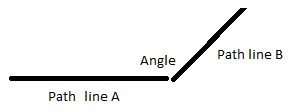
An angle is usually a term of measurement about two lines that come together. These lines can be imaginary or real.

A square has four equal sides and four equal 90 degree angles. (Imaginary or real)

At first the path up the mountain was not too difficult, although there were some parts where the elevation increased at a very sharp angle. (real)

In the second example, the two lines coming together are the flat part of the path and the part of the path that has a sharp change in elevation.


If you understand how not to make these ten common mistakes, it will help you use the words discussed in this article correctly. As mentioned above, a good way to try to learn the differences between the words is to memorize common collocations with these words, for example, the corner of the street, a right angle (90 degree angle), keep safe, hold still. And, of course, practice, practice practice actively (through speaking and writing) using the words in context.
What are some other common mistakes that Russian speakers learning English make (or English learners who speak other languages)? Feel free to add your own thoughts in the comment section.