Showing posts with label English for Russian Speakers. Show all posts

Sunday, April 23, 2023

This Site Offers Free English Lessons For Ukrainians And Good Learning Resources For Any Students

 This organization matches volunteer English teachers and conversation partners with Ukrainians affected by the war:  https://www.teachersforukraine.org/

The site also has a good list of self-study materials for any students. Although it doesn't have computer assisted learning apps like Duolingo or Babbel, which can be very useful for beginners and pre-intermediate students. 

Thursday, February 28, 2019

6 Common Mistakes And Confusing Words About Film


Watching movies can be an enjoyable and useful way to learn and practice languages. Here are six common mistakes and confusing words in English related to film. Some of these are specific mistakes that Russian speakers make, but any English learner might find them useful as well.


What's the difference between movie and film

In general, these two words mean the same thing. One can say, "I want to watch a good movie", or "I want to watch a good film"; the meaning is the same. However, movie tends to be used more in American English and film tends to be used more in British English.

Film
 also has a more artistic association.  In this sense, a film can refers to a work with greater artistic value instead of a movie, which may be made primarily for entertainment and profit and not artistic aims. For example:

I am an artist! I don't just make movies, I make films!

Lastly, Film (and the word cinema too, as we will see below) can refer to the art form itself.

Film is a fairly new art form as opposed to music, dance, painting and sculpture, which are thousands of years old.


What's the difference between a horror movie and a horrible movie?

Horror: an intense feeling of fear, shock, or disgust.

Horrible: causing or likely to cause horror; shocking.

These two words are similar in meaning, which causes the confusion, but they have very different meanings with we use them with the words movie or film. A horror movie is a genre of film, a type of movie like comedy, drama, or romance, which is about scary things that makes one feel fear.

Dave doesn't like horror movies that are filled with blood, terror, and violence, because he thinks the real world has enough horror already-- just look at the news!

horrible movie is a very bad movie that is of low quality and that people think isn’t good.

I can't believe I paid money to see that horrible movie. I just wasted two hours of my life!


What's the difference between a fantastic movie and a fantasy movie?

Fantastic has two meanings, which can lead the confusion here. The first meaning is similar to the world fantasy: imaginative or fanciful; remote from reality. However, the second meaning is "extraordinarily good or attractive." When we use this word with film or movie, it is the second meaning that we use.

The critics and the public thought it was a fantastic movie, and they highly recommend it. It will probably win at least one Academy Award.

Fantasy means "the ability of imagining things, especially things that are impossible or improbable." And we talk about the genre of fantasy when we talk about fantasy films or movies. These are movies that are about things that are not possible in the real world, such as films about fairy tales, dragons or magic.

Some people think fantasy films like "Lord or the Rings" or The Harry Potter series just help us to escape the harshness of reality, but these stories also help us to understand what is really important in life. They are modern fairy tales and myths.


What's the difference between hero and main character

Sometimes hero and main character are the same, but this is not always the case. The main character in a film is the leading character of a story. The story is centered around the main character, and it is this character that makes the key decisions in the story. A hero is a certain type of main character that does great and important things, which are usually for good or noble purposes. Heroes can be fictional characters like Hercules, King Arthur, Superman or Batman, who do great actions to save and help the world. A hero could also be a real person that has done great things like Gandhi, Abraham Lincoln, Nelson Mandela, or someone else who shows great courage in some way, for example, by running into a burning building to save someone. Thus, almost all movies have main characters, but not all of them have heroes.

Even if the main character of a film isn't someone whom we like and respect, a good film will help us to see the main character’s motivations and understand this person better. 

The film is about a simple lawyer who becomes a hero after showing great courage by fighting for justice against corrupt government officials.


What's the difference between scene and stage?

In Russian these words can both be translated as сцена. However, in English these words have different meanings. Scene is the time and place where the actions of a film (or play) happen.

The first scene of the movie happens in the 1940s, when the main character of the movie arrives in New York City for the first time. The last scene of the movie takes place 50 years later in the countryside, when the main character is an old women. 

A stage is the raised floor or platform usually in a theater on which actors, musicians or speakers perform.

We should have bought better tickets for the show, because our seats were so bad we could hardly see the actors on the stage.

"All the world’s a stage,
And all the men and women merely players;
They have their exits and their entrances,
And one man in his time plays many parts..."

--William Shakespeare


What's the difference between the words movie theater and cinema?

The general meaning of these expressions are the same: they are both the theater where one goes to watch a movie or film. The difference, like movie and film, is that the first one is usually used in American English and other is usually used British English.

However, the word cinema also refers to the art form of film.

"Cinema is the most prestigious cultural activity in the modern world. It is for us what theatre was in the age of Shakespeare or painting was in the days of Leonardo da Vinci...”

--Alain de Botton and The School of Life

So, cinema can mean both the art form of film and the place where we go to watch a movie or film.


Hopefully, understanding these common mistakes will help you enjoy learning English with film better. What are some other common mistakes about film you make? Feel free to add them in the comments section.


Thursday, October 20, 2016

English for Russian Speakers: 10 More Common Mistake


This is the second article in a series of articles about common mistakes in English for Russian speakers (although English learners who speak other languages also make some of these mistakes too). You can see the first article here on this blog and here on Italki . Together, both articles include 25 of the most common mistakes made by Russian-speaking students learning English.


Dictionary and Vocabulary

Incorrect: In order to improve my English level, I need to increase my dictionary.

Correct: In order to improve my English level, I need to increase my vocabulary.

The confusion between these two words comes from the fact that in Russian they can both be translated as Словарь, but in English they are two different words. A dictionary is a book or an electronic resource that has a list of words and their definitions. Vocabulary refers to the words used in a particular language, or the words known by an individual.

Finding the definition of words in a dictionary can help you to increase your vocabulary.


Decide and Solve

In Russian, decide and solve are very similar and are both usually translated as решать, but they have different meanings in English. Decide means to make a choice, but solve means to make the best or correct choice to answer or fix a problem.

We decided to have Chinese food instead of Mexican food (we made a choice).

Solve this math problem: X+10=15

Tim and Tina decided that the best way to solve their relationship problems was to talk more with each other and improve their communication skills.


That and What

Incorrect: I think what you should study more.

Correct: I think (that) you should study more (‘that’ can be used or omitted).

In my opinion, this mistake is one of the most common and difficult to explain. Part of the problem is because that and what can both be translated as the Russian word что.

First let’s look at when to use what. The simple answer I sometimes give my lower level students is that you usually use that instead of what unless you are answering or asking a question with what. However, this is often not the case, and the actual answer is more complex.

The actual answer is that while the word what is often used as an interrogative pronoun (a pronoun used to ask questions), for example, “What is your name?”, it can also be used as a fused (joined) relative pronoun, for example, “I like what you wrote in the article’. This is a bit more difficult to understand, but basically, in this case what refers to the thing being liked (the article), and cannot be removed because it substitutes for the object in the first part of the sentence.

I like what you said at the meeting yesterday.

Therefore, when what is the object of a noun clause, like in the above examples, it is necessary and cannot be removed.

However, when that is used as a conjunction to introduce a noun clause, it’s not necessary, and in cases where the sentences is clear, we can omit that:

He told me (that) he had been there before.

She decided (that) it was a good idea to bring an umbrella.

I think (that) studying another language is a good use of time.


Fun and Funny

Incorrect: The joke was so fun (that) we laughed out loud (yes, we can omit ‘that’ here! See above).

Correct: The joke was so funny (that) we laughed out loud.

Incorrect: Learning new things can be funny.

Correct: Learning new things can be fun (yes, it can sometimes be funny too depending on what you learn!)

It’s fun to play in the sun.

Fun (весело) is something that is enjoyable and pleasurable.  Funny (смешной)  is something that is humorous and might cause us to laugh or something that might seem amusing (забавный).  It’s easy to confuse the meanings because they can be similar: something fun can be funny and something funny can be fun.

We had a fun time watching funny movies.


Learn and Study

Incorrect: Babies study how to make sentences after the age of two years old.

Correct: Babies learn how to make sentences after the age of two years old.

Like in Russian, learn and study are very close in meaning, and often we can substitute one for the other. For example:

We already learned/studied that subject last year.

The difference is that learning is the process of acquiring, or getting knowledge or skills. Studying, however, is the process of devoting time and energy to trying to learn something. In this sense, one may study all day but learn nothing. Study is usually translated as изучить or учиться.  Learn is usually translated as научиться, учить, узнавать, although it also can be used as учиться, which is another reason for the confusion between the two words.

Without rest, exercise, and a healthy diet, students may study hard but learn little.

As long as you live, keep learning how to live. --Lucius Annaeus Seneca


Story and History

Incorrect: They have many interesting histories from their travels.

Correct: They have many interesting stories from their travels.

In Russian, the word, история, can be translated as either story or history, depending on the context. However, these words usually have different meanings in English. Story is used for a general telling about real or imagined events for entertainment or other purposes.

The story of her life was made into a movie.

I like adventure stories that happen in magical lands with wizards, warriors, and monsters.

Story can also be used to tell about past events from someone’s life or the development of something.

My grandfather told me many stories about his life when he was young.

The Beatles are essential to the story of modern pop music (in this sense history can also be used).

Like in Russian, history refers to the subject of history, the study of past events, and the recording of these events.

"Those who do not learn history are doomed to repeat it." --George Santayana

If you have a good teacher, history class can be very interesting.

History can also be a series of past events connected with something or someone.

The history of this old house is quite interesting.

It’s important to share your medical history with a new doctor.

After a history failed relationships, she finally got married.

Check out this link for more information on how to use the word history.


 Ill, Ills and Illness

Incorrect: Most types of ills can be treated by medicine, but, of course, not all of them can be cured.

Correct: Most types of illnesses can be treated by medicine…

Illness (болезнь) is when someone is unwell (sick), and is a noun.

He has a bad illness.

Ill in singular form can be used as a noun or an adjective referring to one who is sick or unwell.

He wasn’t able to come today because he is ill. (adjective)

It’s important that we remember that the mentally ill can suffer as much as the physically ill. (noun)

Ill should be used only in singular form when talking about disease or sickness. If we want to talk about different forms of being ill,  we can used illness in the plural form.

People can suffer from both mental and physical illnesses at the same time.

Ill can also be an noun that refers to something that is evil, or causes harm or misfortune.

We wish no one ill.

In this sense, we can use ill in the plural form.

Although humanity has solved many social ills, there are still many ills that we are still trying to fix such as pollution, war, and crime.


Complex and Difficult

Even people with simple personalities, after some study, are more complex then they seem.
He has a difficult personality, it can be very hard to live or work with her.

Complex and difficult can both be translated as сложный in Russian, but the meanings are different in English. Complex means something that consists of many different and connected parts. Difficult means something that takes much effort to do. Sometimes a complex task can be difficult, so in this way, the words can be related, but they are not the same.

The complex economic issues of our modern times are difficult to solve.

But a difficult task is not always complex.

It was very difficult to train for the marathon, but it wasn’t complex. I just had to follow my training schedule, and run a little farther each day.


Keep and Hold

These two words can usually be translated as держать or  иметь  in Russian, and while sometimes the words can be used interchangeably, they often have different meanings.

Sometimes the words have the same meaning:

A good teacher should be able to keep/hold students’ attention.

One should keep/hold their head straight to have good posture.

On the simplest level, hold often means to grasp or take something, while keep means to take something and possess it, to continue to have it.

Let’s look at the following examples:

Can I hold your baby?

If someone asks this question, they are asking to hold it in their arms for a short time.

Can I keep your baby?

This is a totally different question: here they are asking to take the baby and to never give it back, but to have (keep) it for themselves.

However, someone can make it clear that they only want to keep something for a limited time.

Can you keep my cat until next Tuesday?

However, there are many differences between the two words and besides the basic difference mentioned above, the best thing to do is to review the various definitions for each word and to memorize the collections with the different meanings. With practice, you’ll be able to use the correct word for the correct meaning.

We are holding a meeting next week… NOT keeping a meeting.

It’s important to keep safe when visiting a new place… NOT hold safe.

She kept forgetting his name… NOT held forgetting.

Some additional resources on this topic can be found here and here.

Corner and Angle

Incorrect: The upper right angle of the picture was damaged.

Correct: The upper right corner of the picture was damaged.

Incorrect: Although the cliff is not high, it drops down to the ocean at a very sharp corner.

Correct: Although the cliff is not high, it drops down to the ocean at a very sharp angle.

These two words are confused because they can be translated as the word угол in Russian, however, in English they are different but related words.

A simple way to remember the difference is that a corner is usually a physical thing.

I will meet you on the corner of Main Street and 2nd Avenue.

She was sitting in the corner of the room.

The page number is usually in the corner of a book’s page.

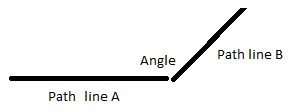
An angle is usually a term of measurement about two lines that come together. These lines can be imaginary or real.

A square has four equal sides and four equal 90 degree angles. (Imaginary or real)

At first the path up the mountain was not too difficult, although there were some parts where the elevation increased at a very sharp angle. (real)

In the second example, the two lines coming together are the flat part of the path and the part of the path that has a sharp change in elevation.


If you understand how not to make these ten common mistakes, it will help you use the words discussed in this article correctly. As mentioned above, a good way to try to learn the differences between the words is to memorize common collocations with these words, for example, the corner of the street, a right angle (90 degree angle), keep safe, hold still. And, of course, practice, practice practice actively (through speaking and writing) using the words in context.
What are some other common mistakes that Russian speakers learning English make (or English learners who speak other languages)? Feel free to add your own thoughts in the comment section.


Monday, June 20, 2016

List of Key English-Russian Legal Terms

This list is almost complete. If anyone can help to complete or correct the definitions in Russian, please do. Thanks!


PEOPLE IN LAW
Paralegal- paralegal сущ.
общ. помощник юриста; помощник адвоката; ассистент юриста; ассистент адвоката; параюридический

Lawyer-сущ. юрист; адвокат; законовед

Judge-сущ. общ. судья; арбитр; эксперт; ценитель

LAW IN GENERAL

Law- общее право; Закон; право
Legal  законный, легальный -
Illegal- незаконный, нелегальный

JURISDICTION & TYPES OF JURISDICTION
Jurisdiction  юрисдикция и виды юрисдикции
Subject matter Jurisdiction
Personal Jurisdiction

COURT PROCEEDINGS  судебные дела
Civil Action гражданское дело
Criminal Action  уголовное дело

Appeal  апелляция

Trial   судебный процесс
Court Order судебный регламент

Decision решение
Precedent  прецедент

COURT PROCEEDINGS
Stare Decisis
Proceeding  судебное дело,  разбирательство
Judgment  судебное решение
PARTIES участники (судебного ппроцесса)

Plaintiff   истец
Defendant  ответчик, подсудимый, обвиняемый
Petitioner  истец
Respondent  ответчик

PARTIES
Appellant  аппелянт
Appellee  аппелирующий

TYPES OF LAW  типы законодательств
Substantive Law
Procedural Law  процедурное законодательство

Constitutional Law  конституционное законодательство
Statutory Law   административное законодательство
Administrative Law-административное законодательство  


TYPES OF LAW
Case law   прецедентное право
Common Law  общее право

DOCUMENTS USED IN COURT ACTIONS  документы, используемые в суде
Pleading   ходатайство
Complaint  иск, жалоба
Motion  предложение  
Answer
Brief  изложение дела

Summons - судебная повестка

DOCUMENTS USED IN COURT ACTIONS
Memorandum of Law

English for Russian Speakers: 15 Common English Mistakes (15 типичных ошибок русских при изучении английского языка)


By Daniel Borsody

1.  I feel myself

 Incorrect: I feel myself fine today.

 Correct: I feel fine today.

Unlike Russian, English does not use the reflexive pronoun myself (себя) after the verb to feel. Hence, we say in English I feel well; I feel sick; I feel happy. Saying I feel myself  to a native English speaker will sound strange, as it seems to express that one is physically feeling or touching one’s own body.

2. Enough

 Incorrect: She spoke English enough well to get the job.

 Correct: She spoke English well enough to get the job.

In general, word order in English is stricter than in Russian. Correct placement of the word enough depends on whether the word is modifying an adverb, adjective or noun. If it’s modifying an adverb or adjective, it’s placed after the verb:

Do you think he’s old enough to watch that movie?

We’ve done enough today.

If it’s modifying a noun, it’s placed before the verb:

We had enough money to buy a ticket.

3. Normal

 Incorrect: “How are you?”

                “I’m normal, thanks.”

 Correct:    “How are you?”  

                 “I’m fine, thanks.”

In English we don’t usually use the word normal (нормально) to answer questions about our mood or our day. Instead, one should use words such as fine or okay. Normal in English means average or not strange. Saying that you are normal in reply to these questions sounds like you are trying to say that you are a normal person and not a strange or even crazy person (this may or may not be the case, but it probably is not what you are intending to say!).

4. ученый (scientist, scholar)

Incorrect: Scientists study history so that humanity can learn from the past.

Correct: Scholars study history so that humanity can learn from the past.

In English the word ученый can be translated as scientist or scholar, but each word has a different meaning. A scientist is someone who is an expert in a science, especially what are called the hard sciences (physics, chemistry, biology, etc.) or the social sciences (psychology, sociology, political science, etc.). A scholar is a term that is used more broadly to mean someone who is an expert in a certain area of knowledge and has a profound understanding of this subject gained through in depth study. The word scholar isn’t used for an expert in the sciences, but it can be used for subjects such as history, languages and art. Scholar can also be used for a student who has received a scholarship (стипендия). Here’s another way to understand the difference between scientist and scholar: a scientist is able to use the scientific method (hypothesis, experiment, and conclusion) to study subjects, while a scholar does not necessarily need to use scientific experiments to study a subject.

5. Prepositions:

Incorrect: I was waiting David on the theater.

Correct: I was waiting for David at the theater.

One of the most common mistakes for Russian speakers learning English is confusing or omitting prepositions. This is often difficult because English and Russian expressions often have prepositional phrases that seem to be the same, but are in fact different. Here is a list of commonly confused prepositions:

Depends on     зависеть от    

Tired of             устал от         

Divide into       разделить на

In addition to using the wrong preposition, often English expressions do not use a 
preposition when one is necessary in Russian and vice versa.  For example:

To wait for someone                              ждать кого-то  
To graduate from school                       закончить школу
To listen to someone/music                 слушать кого-то / музыку
To be afraid of someone/something  бояться кого-то / что-то
Explain to someone                               объяснить кому-то
To answer a question                            ответить на вопрос

Finally, there are some common categories of prepositions that can be helpful to understand:

Surface: on                                          (table, wall, floor, plate, roof, face, shelf, etc.)
Technology: on                                  (computer, TV, radio, screen, DVD, hard drive, CD etc.)
Large transport: on                          (train, bus, tram, plane, ship, ferry, etc.)
Inside a physical object/structure: in     (book, newspaper, hat, drawer, pocket, box, room, etc.)
Places:  at/in           (office, stadium, shop, supermarket, station, theater, park, etc.)

6. How and What

Incorrect: How do you call this in English?

Correct:  What do you call this in English?

How and what are often confused by Russian speakers because they make the mistake of directly translating phrases like Как это называется?”  from Russian to English. Remember that this is not always the case.

7. City

Incorrect: I am from Moscow city.

Correct: I am from Moscow/the city of Moscow.

Usually, one can say the name of a city (Moscow, New York, London) without including the word city. One should include city when stating the official name of the city. Most cities use the construction the city of…( the city of London, the city of Boston, the city of Moscow), but some cities use the word city directly after the proper noun (New York City). It’s also sometimes necessary to use city to make clear that one is referring to a specific city and not a geographical area with the same name.

I grew up in a small town in the state of New York, but now I live in New York City.

Although I have lived in Moscow for several years, my parents still live in a small town outside of the city but still in Moscow Oblast.

Finally, remember that some cities include the word city in their name. For example, Salt Lake City and Mexico City. For these cities, it is of course always necessary to use the word city, since it is part of their name.

I visited Salt Lake City this summer.

8. Plural and Singular

Incorrect: The professor gave us several useful advices for our researches.

Correct:  The professor gave us several useful words of advice for our research projects.

Russian and English both have countable nouns (chair, apple, glass) and uncountable nouns (water, time, rice), but Russian speakers often confuse nouns that are countable in Russian but not in English.  Here’s a list of commonly confused uncountable nouns in English:

Advice, research, knowledge, accommodation, baggage, equipment, furniture, garbage, information, luggage, money, news, pasta, progress, travel, work

Remember that if you want to express uncountable nouns in plural form, you must use a word such as piece, glass, chunk.

We just bought several new pieces of equipment for our lab.

I’ll have three glasses of lemonade, please.

She cut off a large chunk of meat and fed it to her dog.

Finally, there are a few expressions that should be singular in English, but Russian speakers often make plural.

Thank God, we have each other. NOT Thanks God

No problem! NOT No problems

We have no comment about the case. NOT no comments

9. Possibility and Opportunity

Incorrect: I will have the possibility to go to the conference next year.

Correct: I will have the opportunity to go to the conference next year.

Russian speakers often overuse the word possibility when trying to use the word возможность in English. While возможность can mean possibility and 
opportunity, it depends on the context. Remember that possibility means that something might be capable of happening or might be true. Opportunity means favorable circumstances that make it possible to do something or the chance for advancement or promotion.

There is a possibility that it will rain tomorrow, so you will have an opportunity to use your new umbrella.

There is a possibility that we will have enough funding for another research assistant position. If so, you will have an opportunity to apply for this position.

10. Say and Tell

Incorrect: Can you say me how to tell this in English?

Correct: Can you tell me how to say this in English?

Say is used in general to speak about something that has been said by someone. It’s used to report what someone else has said. Tell is used in a more specific sense to mean the process of instructing or informing someone about something. This is a one-way process, and the verb tell must be followed by a direct object (tell us/him/her/the audience).

At lunch John told his coworkers about his business trip to China.

John said that the business trip to China went very well.

Remember these collocations:

Tell a story, a lie, a secret, a joke, the truth.

Say yes or no, a few words, something.


11. Learn and Teach

Incorrect: Can you learn me to speak English better?

Correct: Can you teach me to speak English better?

Learn and teach are often confused because, depending on the context, they can both mean учить. However, in English their meanings are completely different. Learn is what a student does (научиться). Teach is what a teacher does (преподавать).

I remind myself every morning: Nothing I say this day will teach me anything. So if I'm going to learn, I must do it by listening. --Larry King

12. Free

Incorrect: I want to speak English freely.

Correct: I want to speak English fluently.       
                          
If one wants to express being able to speak a language easily and accurately, we use the word fluent not free (cвободно). Free can also mean something which costs nothing (бесплатно). However, when free is placed after a noun (smoke-free, car-free, alcohol-free), it means this thing or action is prohibited.

This is the smoke-free bar. If you want to smoke, you must go outside.

13. Do and Make

Incorrect: I think I did a mistake

Correct: I think I made a mistake.

Do and make can both be translated as сделать in Russian, which leads to the confusion for Russian speakers. The good news is that there are a few guidelines about when to use make and when to do use do.

We often use do for daily activities or jobs that do not produce a physical object.

Do homework, do the dishes, do the laundry, do a job, do the shopping

We also use do when we speak about things in general but don’t specifically name this activity. Instead, we use words like something, nothing anything, everything, etc.

He has done nothing all day.
She would do anything for her Mom.
Is there something I can do for you?

Make is often used to express constructing, building and creating something you can touch.

Make food, make a cup of tea, make clothes, make a mess

However, there are many make and do collocations that do not follow these guidelines and must simply be memorized.  

Make money, do someone a favor, do business, make a decision, do good, make a plan

14. дорогой (expensive, dear)

Incorrect: That computer is too dear for me to buy.

Correct: That computer is too expensive for me to buy.

The word дорогой can be translated as expensive or dear. Both words mean something that is valuable to a person, but usually in different senses. Although dear can mean something that is valuable in a financial sense, most speakers today use it to mean something that is valuable in emotional or personal sense.

 This necklace isn’t very expensive, but, since it belonged to my grandmother, it is very dear to me.

Expensive refers to something that is valuable in a financial sense.

I wish I hadn’t dropped my new iPhone in the toilet. It was really expensive!

15. Gender

Incorrect: It’s time I bought a new computer, since he is very old.

Correct: It’s time I bought a new computer, since it is very old.

Russian speakers often use the pronouns he or she when they should use it. Remember that in English we only use he or she when referring to people. It is appropriate to use he or she for animals, such as dogs, cats, or other animals whose gender is easier to determine. We often do this for pets or other animals for which we have personal affection and tend to personify:

I have fond memories of my dog, Spot. He was a great dog.

We also can use gender for intimate objects for which we have great personal affection or attachment such as cars, ships, or even countries:

Look at that sports car! Isn’t she a beauty?

God bless America,
Land that I love,
Stand beside her, and guide her
Through the night with a light from above.--Irving Berlin

There are some words in English that are gender specific. These words refer to natural gender, the actual sex of a person or animal.

Feminine: women, girl, mother, daughter, aunt, niece, nun, goddess, empress, queen, princess, heroine, actress, waitress, lioness, cow
Masculine: man, boy, father, son, uncle, nephew, monk, god, emperor, king, prince, hero, actor, waiter,  lion, bull

In modern usage, for some of the masculine forms of these words such as waiter, actor, hero, it has become acceptable for them to include both male and female genders. This makes it easier to be gender inclusive. One can add male or female before the word, if it’s necessary to denote gender.

During Shakespeare’s day, female actors were forbidden from preforming on the stage. Therefore, male actors played all female roles.
Although ancient Greek myths tend to focus on exploits of male heroes, scholars have tried to demonstrate that many of the female characters in these myths can also be interpreted as heroes.*

*In English the word hero usually does not just mean the main character in the story. Instead, a hero is a person, real or fictional, who shows great courage or sacrifice, often for the greater good.

For more information on common mistakes made by Russian speakers, check out these resources:

·         OTUK’s blog has some good in depth explanations of confusing words, more confusing words and yet more confusing words, prepositions, gender, and singular vs plural

·         Some of Tim Kirby’s Война слов! videos like this one here .

·         Blab club’s videos


·         And finally, you can practice your English pronunciation with President Vladimir Putin here