Thursday, October 20, 2016

English for Russian Speakers: 10 More Common Mistake


This is the second article in a series of articles about common mistakes in English for Russian speakers (although English learners who speak other languages also make some of these mistakes too). You can see the first article here on this blog and here on Italki . Together, both articles include 25 of the most common mistakes made by Russian-speaking students learning English.


Dictionary and Vocabulary

Incorrect: In order to improve my English level, I need to increase my dictionary.

Correct: In order to improve my English level, I need to increase my vocabulary.

The confusion between these two words comes from the fact that in Russian they can both be translated as Словарь, but in English they are two different words. A dictionary is a book or an electronic resource that has a list of words and their definitions. Vocabulary refers to the words used in a particular language, or the words known by an individual.

Finding the definition of words in a dictionary can help you to increase your vocabulary.


Decide and Solve

In Russian, decide and solve are very similar and are both usually translated as решать, but they have different meanings in English. Decide means to make a choice, but solve means to make the best or correct choice to answer or fix a problem.

We decided to have Chinese food instead of Mexican food (we made a choice).

Solve this math problem: X+10=15

Tim and Tina decided that the best way to solve their relationship problems was to talk more with each other and improve their communication skills.


That and What

Incorrect: I think what you should study more.

Correct: I think (that) you should study more (‘that’ can be used or omitted).

In my opinion, this mistake is one of the most common and difficult to explain. Part of the problem is because that and what can both be translated as the Russian word что.

First let’s look at when to use what. The simple answer I sometimes give my lower level students is that you usually use that instead of what unless you are answering or asking a question with what. However, this is often not the case, and the actual answer is more complex.

The actual answer is that while the word what is often used as an interrogative pronoun (a pronoun used to ask questions), for example, “What is your name?”, it can also be used as a fused (joined) relative pronoun, for example, “I like what you wrote in the article’. This is a bit more difficult to understand, but basically, in this case what refers to the thing being liked (the article), and cannot be removed because it substitutes for the object in the first part of the sentence.

I like what you said at the meeting yesterday.

Therefore, when what is the object of a noun clause, like in the above examples, it is necessary and cannot be removed.

However, when that is used as a conjunction to introduce a noun clause, it’s not necessary, and in cases where the sentences is clear, we can omit that:

He told me (that) he had been there before.

She decided (that) it was a good idea to bring an umbrella.

I think (that) studying another language is a good use of time.


Fun and Funny

Incorrect: The joke was so fun (that) we laughed out loud (yes, we can omit ‘that’ here! See above).

Correct: The joke was so funny (that) we laughed out loud.

Incorrect: Learning new things can be funny.

Correct: Learning new things can be fun (yes, it can sometimes be funny too depending on what you learn!)

It’s fun to play in the sun.

Fun (весело) is something that is enjoyable and pleasurable.  Funny (смешной)  is something that is humorous and might cause us to laugh or something that might seem amusing (забавный).  It’s easy to confuse the meanings because they can be similar: something fun can be funny and something funny can be fun.

We had a fun time watching funny movies.


Learn and Study

Incorrect: Babies study how to make sentences after the age of two years old.

Correct: Babies learn how to make sentences after the age of two years old.

Like in Russian, learn and study are very close in meaning, and often we can substitute one for the other. For example:

We already learned/studied that subject last year.

The difference is that learning is the process of acquiring, or getting knowledge or skills. Studying, however, is the process of devoting time and energy to trying to learn something. In this sense, one may study all day but learn nothing. Study is usually translated as изучить or учиться.  Learn is usually translated as научиться, учить, узнавать, although it also can be used as учиться, which is another reason for the confusion between the two words.

Without rest, exercise, and a healthy diet, students may study hard but learn little.

As long as you live, keep learning how to live. --Lucius Annaeus Seneca


Story and History

Incorrect: They have many interesting histories from their travels.

Correct: They have many interesting stories from their travels.

In Russian, the word, история, can be translated as either story or history, depending on the context. However, these words usually have different meanings in English. Story is used for a general telling about real or imagined events for entertainment or other purposes.

The story of her life was made into a movie.

I like adventure stories that happen in magical lands with wizards, warriors, and monsters.

Story can also be used to tell about past events from someone’s life or the development of something.

My grandfather told me many stories about his life when he was young.

The Beatles are essential to the story of modern pop music (in this sense history can also be used).

Like in Russian, history refers to the subject of history, the study of past events, and the recording of these events.

"Those who do not learn history are doomed to repeat it." --George Santayana

If you have a good teacher, history class can be very interesting.

History can also be a series of past events connected with something or someone.

The history of this old house is quite interesting.

It’s important to share your medical history with a new doctor.

After a history failed relationships, she finally got married.

Check out this link for more information on how to use the word history.


 Ill, Ills and Illness

Incorrect: Most types of ills can be treated by medicine, but, of course, not all of them can be cured.

Correct: Most types of illnesses can be treated by medicine…

Illness (болезнь) is when someone is unwell (sick), and is a noun.

He has a bad illness.

Ill in singular form can be used as a noun or an adjective referring to one who is sick or unwell.

He wasn’t able to come today because he is ill. (adjective)

It’s important that we remember that the mentally ill can suffer as much as the physically ill. (noun)

Ill should be used only in singular form when talking about disease or sickness. If we want to talk about different forms of being ill,  we can used illness in the plural form.

People can suffer from both mental and physical illnesses at the same time.

Ill can also be an noun that refers to something that is evil, or causes harm or misfortune.

We wish no one ill.

In this sense, we can use ill in the plural form.

Although humanity has solved many social ills, there are still many ills that we are still trying to fix such as pollution, war, and crime.


Complex and Difficult

Even people with simple personalities, after some study, are more complex then they seem.
He has a difficult personality, it can be very hard to live or work with her.

Complex and difficult can both be translated as сложный in Russian, but the meanings are different in English. Complex means something that consists of many different and connected parts. Difficult means something that takes much effort to do. Sometimes a complex task can be difficult, so in this way, the words can be related, but they are not the same.

The complex economic issues of our modern times are difficult to solve.

But a difficult task is not always complex.

It was very difficult to train for the marathon, but it wasn’t complex. I just had to follow my training schedule, and run a little farther each day.


Keep and Hold

These two words can usually be translated as держать or  иметь  in Russian, and while sometimes the words can be used interchangeably, they often have different meanings.

Sometimes the words have the same meaning:

A good teacher should be able to keep/hold students’ attention.

One should keep/hold their head straight to have good posture.

On the simplest level, hold often means to grasp or take something, while keep means to take something and possess it, to continue to have it.

Let’s look at the following examples:

Can I hold your baby?

If someone asks this question, they are asking to hold it in their arms for a short time.

Can I keep your baby?

This is a totally different question: here they are asking to take the baby and to never give it back, but to have (keep) it for themselves.

However, someone can make it clear that they only want to keep something for a limited time.

Can you keep my cat until next Tuesday?

However, there are many differences between the two words and besides the basic difference mentioned above, the best thing to do is to review the various definitions for each word and to memorize the collections with the different meanings. With practice, you’ll be able to use the correct word for the correct meaning.

We are holding a meeting next week… NOT keeping a meeting.

It’s important to keep safe when visiting a new place… NOT hold safe.

She kept forgetting his name… NOT held forgetting.

Some additional resources on this topic can be found here and here.

Corner and Angle

Incorrect: The upper right angle of the picture was damaged.

Correct: The upper right corner of the picture was damaged.

Incorrect: Although the cliff is not high, it drops down to the ocean at a very sharp corner.

Correct: Although the cliff is not high, it drops down to the ocean at a very sharp angle.

These two words are confused because they can be translated as the word угол in Russian, however, in English they are different but related words.

A simple way to remember the difference is that a corner is usually a physical thing.

I will meet you on the corner of Main Street and 2nd Avenue.

She was sitting in the corner of the room.

The page number is usually in the corner of a book’s page.

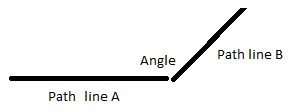
An angle is usually a term of measurement about two lines that come together. These lines can be imaginary or real.

A square has four equal sides and four equal 90 degree angles. (Imaginary or real)

At first the path up the mountain was not too difficult, although there were some parts where the elevation increased at a very sharp angle. (real)

In the second example, the two lines coming together are the flat part of the path and the part of the path that has a sharp change in elevation.

If you understand how not to make these ten common mistakes, it will help you use the words discussed in this article correctly. As mentioned above, a good way to try to learn the differences between the words is to memorize common collocations with these words, for example, the corner of the street, a right angle (90 degree angle), keep safe, hold still. And, of course, practice, practice practice actively (through speaking and writing) using the words in context.
What are some other common mistakes that Russian speakers learning English make (or English learners who speak other languages)? Feel free to add your own thoughts in the comment section.


Thursday, September 29, 2016

JOY By Anton Chekhov, Adapted For Intermediate Level


Level: Intermediate and up

IT was twelve o'clock at night.

Mitya Kuldarov, with excited face and messy hair, ran into his parents' house, and quickly ran through the rooms. His parents had already gone to bed. His sister was in bed, finishing the last page of a novel. His schoolboy brothers were asleep.

"Where have you come from?" cried his parents in surprise. "What is the matter with you?
"Oh, don't ask! I never expected it; no, I never expected it! It's . . . it's positively incredible!"

Mitya laughed and fell into a chair, so overcome by happiness that he could not stand on his legs.

"It's incredible! You can't imagine! Look!"

His sister jumped out of bed and, throwing a blanket around her, went to her brother. The schoolboys woke up.

"What's the matter? You don't look like yourself!"

"It's because I am so happy, Mamma! Do you know, now all Russia knows of me! All Russia! Until now only you knew that there was a clerk called Dmitry Kuldarov, and now all Russia knows it! Mamma! Oh, Lord!"

Mitya jumped up, ran up and down all the rooms, and then sat down again.
"Why, what has happened? Tell us sensibly!"

"You live like wild animals, you don't read the newspapers and do not take notice of what's published, and there's so much that is interesting in the papers. If anything happens it's all known at once, nothing is hidden! How happy I am! You know it's only great people whose names are published in the papers, and now they have published mine!"

"What do you mean? Where?"

Papa turned white. Mamma started to pray. The schoolboys jumped out of bed and, just as they were, in pajamas, went up to their brother.

"Yes! My name has been published! Now all Russia knows of me! Keep the paper, mamma, in memory of it! We will read it sometimes! Look!"

Mitya took out of his pocket a copy of the paper, gave it to his father, and pointed with his finger to a text marked with blue pencil.

"Read it!"

The father put on his glasses.

"Do read it!"

The mamma looked at the religious image on the wall and started to pray again. The papa cleared his throat and began to read: "At eleven o'clock on the evening of the 29th of December, a clerk of the name of Dmitry Kuldarov . . ."

"You see, you see! Go on!"

". . . a clerk of the name of Dmitry Kuldarov, coming from the pub in a drunk  condition. . ."
"That's me and Simon. . . . It's all described exactly! Go on! Listen!"

". . . drunk condition, fell on the ice under a horse of a sled-driver... The scared horse, walking over Kuldarov and pulling the sled over him, together with a Moscow businessman called Stephan Lukov, who was in it, ran along the street and was caught by some people. Kuldarov, at first in an unconscious condition, was taken to the police station and there checked by the doctor. The hit he had received on the back of his head. . ."

"It was from the sled, papa. Go on! Read the rest!"

". . . he had received on the back of his head was not serious. The event was reported. Medical aid was given to the hurt man. . . ."

"They told me to put a warm, wet cloth on the back of my head. You have read it now? Ah! So you see. Now it's all over Russia! Give it to me!"

Mitya took the paper, and put it into his pocket.

"I'll run to our neighbors and show it to them. . . . I must show it to Ivan and Nastya too. . . . I'll run! Good-bye!"

Mitya put on his cap and, joyful and proud, ran into the street.

Vocabulary:  To help learners fully understand the audio and transcript, most vocabulary that might be unknown for this lesson’s level is provided. Vocab in bold is more useful for learners at the lesson’s target level. Try to choose 8 to 10 new words to learn from the story (in general, it’s best to try to learn no more than 8-10 new words a day).

Definitions are written with the help of various sources including Merriam-Webster’s Learner’s Dictionary.

Excited: very enthusiastic and eager about something.

Messy: not clean or tidy.

Incredible: difficult or impossible to believe.

Clerk: a person whose job is to keep track of records and documents for a business or office.

Sensible:  having or showing good sense or judgment: reasonable.

Hidden: not seen or known.

Published: to include an article, letter, etc, in a printed publication like a newspaper or magazine.

To pray: to speak to a god or spirit especially in order to give thanks or to ask for something.

Sled: a small vehicle that has a flat bottom or long, narrow strips of metal or wood on the bottom and that is used for moving over snow or ice.

Unconscious: not conscious; not awake especially because of an injury or drug.

Pocket: a usually small cloth bag that is sewn into a piece of clothing, a larger bag, etc., and that is open at the top or side so that you can put things into it.

To point: to show someone where to look by moving your finger or an object held in your hand in a particular direction.

Drunk: having drunk so much alcohol that normal actions (such as talking, thinking, and moving) become difficult to do.

Cloth: material that is made by weaving together threads of cotton, wool, nylon, etc., and that is used to make clothes, sheets, etc.

Proud: very happy and pleased because of something you have done, something you own, someone you know or are related to, etc.: feeling pride.

Discussion Questions:
1. Why is this story called ‘Joy’?
2. What was the most joyful moment in your life?
3. Is it important for you to be well-known or famous?
4. Does fame or popularity bring happiness?
5. “In the future, everyone will be famous for 15 minutes”. How does this saying relate to this story and to modern life?


Thursday, September 1, 2016

JOY by Anton Chekhov

JOY

Level: Upper Intermediate and up

Listen to the story here

By Anton Chekhov

IT was twelve o'clock at night.

Mitya Kuldarov, with excited face and ruffled hair, flew into his parents' flat, and hurriedly ran through all the rooms. His parents had already gone to bed. His sister was in bed, finishing the last page of a novel. His schoolboy brothers were asleep.

"Where have you come from?" cried his parents in amazement. "What is the matter with you?

"Oh, don't ask! I never expected it; no, I never expected it! It's . . . it's positively incredible!"

Mitya laughed and sank into an armchair, so overcome by happiness that he could not stand on his legs.

"It's incredible! You can't imagine! Look!"

His sister jumped out of bed and, throwing a quilt round her, went to her brother. The schoolboys woke up.

"What's the matter? You don't look like yourself!"

"It's because I am so delighted, Mamma! Do you know, now all Russia knows of me! All Russia! Till now only you knew that there was a registration clerk called Dmitry Kuldarov, and now all Russia knows it! Mamma! Oh, Lord!"

Mitya jumped up, ran up and down all the rooms, and then sat down again.
"Why, what has happened? Tell us sensibly!"

"You live like wild beasts, you don't read the newspapers and take no notice of what's published, and there's so much that is interesting in the papers. If anything happens it's all known at once, nothing is hidden! How happy I am! Oh, Lord! You know it's only celebrated people whose names are published in the papers, and now they have gone and published mine!"

"What do you mean? Where?"

The papa turned pale. The mamma glanced at the holy image and crossed herself. The schoolboys jumped out of bed and, just as they were, in short nightshirts, went up to their brother.

"Yes! My name has been published! Now all Russia knows of me! Keep the paper, mamma, in memory of it! We will read it sometimes! Look!"

Mitya pulled out of his pocket a copy of the paper, gave it to his father, and pointed with his finger to a passage marked with blue pencil.

"Read it!"

The father put on his spectacles.

"Do read it!"

The mamma glanced at the holy image and crossed herself. The papa cleared his throat and began to read: "At eleven o'clock on the evening of the 29th of December, a registration clerk of the name of Dmitry Kuldarov . . ."

"You see, you see! Go on!"

". . . a registration clerk of the name of Dmitry Kuldarov, coming from the pub in Kozihin's buildings in Little Bronnaia in an intoxicated condition. . ."

"That's me and Semyon Petrovitch. . . . It's all described exactly! Go on! Listen!"

". . . intoxicated condition, slipped and fell under a horse belonging to a sled-driver... The frightened horse, stepping over Kuldarov and drawing the sled over him, together with a Moscow merchant called Stepan Lukov, who was in it, dashed along the street and was caught by some house-servants. Kuldarov, at first in an unconscious condition, was taken to the police station and there examined by the doctor. The blow he had received on the back of his head. . ."

"It was from the sled, papa. Go on! Read the rest!"

". . . he had received on the back of his head turned out not to be serious. The incident was duly reported. Medical aid was given to the injured man. . . ."

"They told me to apply a warm, wet cloth to the back of my head. You have read it now? Ah! So you see. Now it's all over Russia! Give it here!"

Mitya seized the paper, folded it up and put it into his pocket.

"I'll run round to the Makarovs and show it to them. . . . I must show it to the Ivanitskys too, Nastya Ivanovna, and Anisim Vassilyitch. . . . I'll run! Good-bye!"

Mitya put on his cap and, joyful and triumphant, ran into the street.

Notes:

Registration clerk: the lowest rank in the Russian civil service.

Holy image: An icon: a religious image in the Russian Orthodox Christian church.


Vocabulary:  To help learners fully understand the audio and transcript, most vocabulary that might be unknown for this lesson’s level is provided. Vocab in bold is more useful for learners at the lesson’s target level. Try to choose 8 to 10 new words to learn from the story (in general, it’s best to try to learn no more than 8-10 new words a day).

Definitions are written with the help of various sources including Merriam-Webster’s Learner’s Dictionary.

Ruffled: disorder or disarrange.

Overcome: to affect (someone) very strongly or severely — usually used as (be) overcome.

Quilt: a bed cover with stitched designs that is made of two layers of cloth filled with wool, cotton, or soft feathers.

Spectacles: a pair of lenses set into a frame and worn over the eyes: glasses.

Intoxicated: affected by alcohol or drugs especially: drunk.

Sled: a small vehicle that has a flat bottom or long, narrow strips of metal or wood on the bottom and that is used for moving over snow or ice.

To draw: to move (something) by pulling.

Merchant: somewhat old-fashioned: someone who buys and sells goods especially in large amounts.

To dash: to run or move quickly or suddenly.

To seize: to get or take (something) in a forceful, sudden, or violent way.

Triumphant: resulting in or celebrating victory or success.


Discussion questions:

1. Why is this story called ‘Joy'?
2. What was the most joyful moment in your life?
3. Is it important for you to be well-known or famous?
4. Does fame or popularity bring happiness?
5. “In the future, everyone will be famous for 15 minutes”. How does this saying relate to this story and to modern life?

Wednesday, August 31, 2016

In Dark Winter, Chekhov Brings Comfort and Joy


Audio Time: 3 min 44 sec

Level: Upper Intermediate and up

Vocabulary:  To help learners fully understand the audio and transcript, most vocabulary that might be unknown for this lesson’s level is provided. Vocab in bold is more useful for learners at the lesson’s target level. Try to choose 8 to 10 new words to learn from the story (in general, it’s best to try to learn no more than 8-10 new words a day).

Definitions are written with the help of various sources including Merriam-Webster’s Learner’s Dictionary

Dreary: causing unhappiness or sad feelings: not warm, cheerful, etc.

To take something personally: interpret a remark or action as directed against oneself and be upset or offended by it, even if that was not the speaker's intention.

Pewter: a dull gray metal that is a mixture of tin and usually lead.

Dread: to fear something that will or might happen.

Coax: to influence or persuade (a person or animal) to do something by talking in a gentle and friendly way.

Plunge: to push (something) into (something) quickly and forcefully.

Gaze: to look at someone or something in a steady way and usually for a long time.

Exile: a situation in which you are forced to leave your country or home and go to live in a foreign country or distant place.

Jaded: feeling or showing a lack of interest and excitement caused by having done or experienced too much of something.

Inhumane: not kind or gentle to people or animals: not humane.

Broken family: a family in which the parents have divorced.

Depict: to show or describe something or someone. 

Luxurious: very comfortable and expensive: richly appealing.

Drab: not bright or colorful: too plain or dull to be interesting.

Flip: to cause (something) to turn or turn over quickly.

Frown: a serious facial expression that usually shows anger, displeasure, or concentration.

Sleigh: a large, open vehicle that is usually pulled by a horse over snow or ice.

Call on: to make a brief visit to someone.

Dispense: to give or provide (something).

Snowed in: unable to leave a place because a lot of snow is falling or has fallen.


Discussion questions:

1. What are some books that have brought you comfort and joy?
2. Who are some of your favorite writers?
3. Is there a book or books that you often read for comfort or inspiration?
4. What makes an author able to write a good story?
5. How can reading literature help us live better and happier lives?

In the new few posts, you’ll be able to read original and adapted short stories of Chekhov. You can see the full list of original and adapted short stories on this blog here.